 Laneo
Book a call →
Laneo
Book a call →
Laneo
Book a call →
Laneo
Book a call →
Per-workspace activation required
● Mortgage brokers — Mortgage Pipeline RecoveryA renewal-recovery system for mortgage brokers: the closed-client book is scanned on a schedule, upcoming renewals surface inside a 120-day window, consent and suppression checks decide who is contactable, and renewal reviews get booked. The brokerage owns its data — a human owns every client conversation.
Illustrative model — not a measured client result · 8.7% retention rate from booked reviews.
Renewals surfaced — clients inside the 120-day window.
Reviews booked — broker conversations from the eligible cohort.
Clients retained — illustrative, at 8.7% retention from booked reviews.
1,200 past-client records scanned → 164 inside the 120-day window → 138 pass consent and suppression (84%) → 23 renewal reviews booked → 2 retained at an 8.7% retention rate from booked reviews → $600K modelled volume at a $300,000 average balance.
Modelled for planning a pilot — not measured. Dashboards show preview data.
| Industry | Mortgage brokers — renewal recovery |
| Stack | n8n · Gmail · operator dashboards — installed around the brokerage’s existing accounts |
| Operating need | Every upcoming renewal surfaced early with consent checked — before the client starts shopping around |
A brokerage can fund hundreds of mortgages and still watch renewals walk out the door. The failure is rarely the rate or the service — it is that nobody was watching the renewal window, so nobody started the conversation in time. Closed files go quiet, dates live in spreadsheets nobody opens, and the broker only learns the client refinanced elsewhere when it is already done.
Mortgage Pipeline Recovery turns the closed-client book into a renewal pipeline. Scheduled scans find clients entering the 120-day window, consent and suppression checks decide who is contactable, and renewal reviews land on the broker’s calendar — early enough to matter.
The system surfaces opportunities and handles scheduling mechanics. The renewal conversation itself is always human — the system never messages borrowers on its own.
Five n8n workflows run the operation; an hourly heartbeat proves the schedules are alive — because a silent schedule is the one failure this system cannot afford.
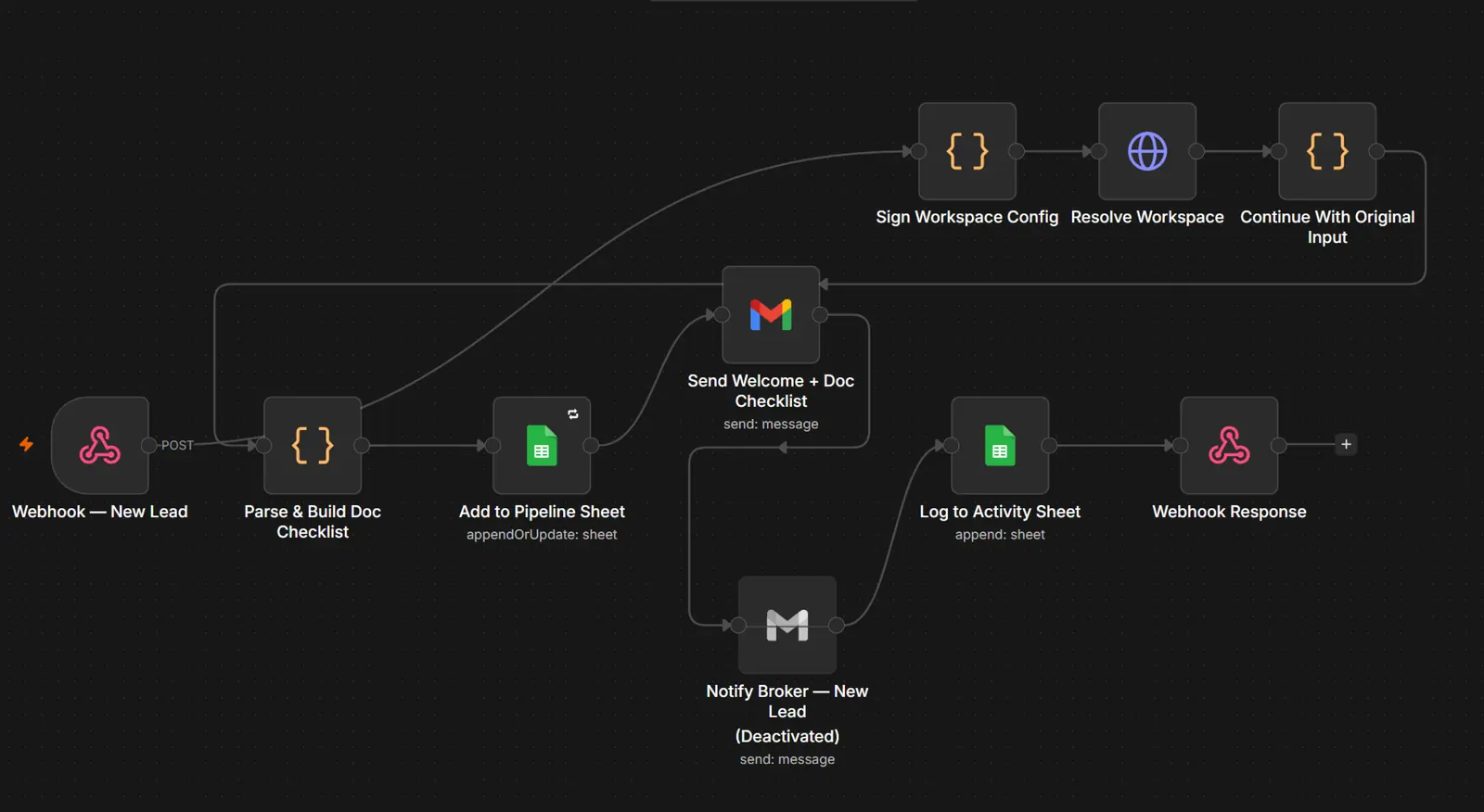
New client records enter through a webhook and land in the book with source preserved. Nothing arrives by spreadsheet import alone — every record has an entry point.
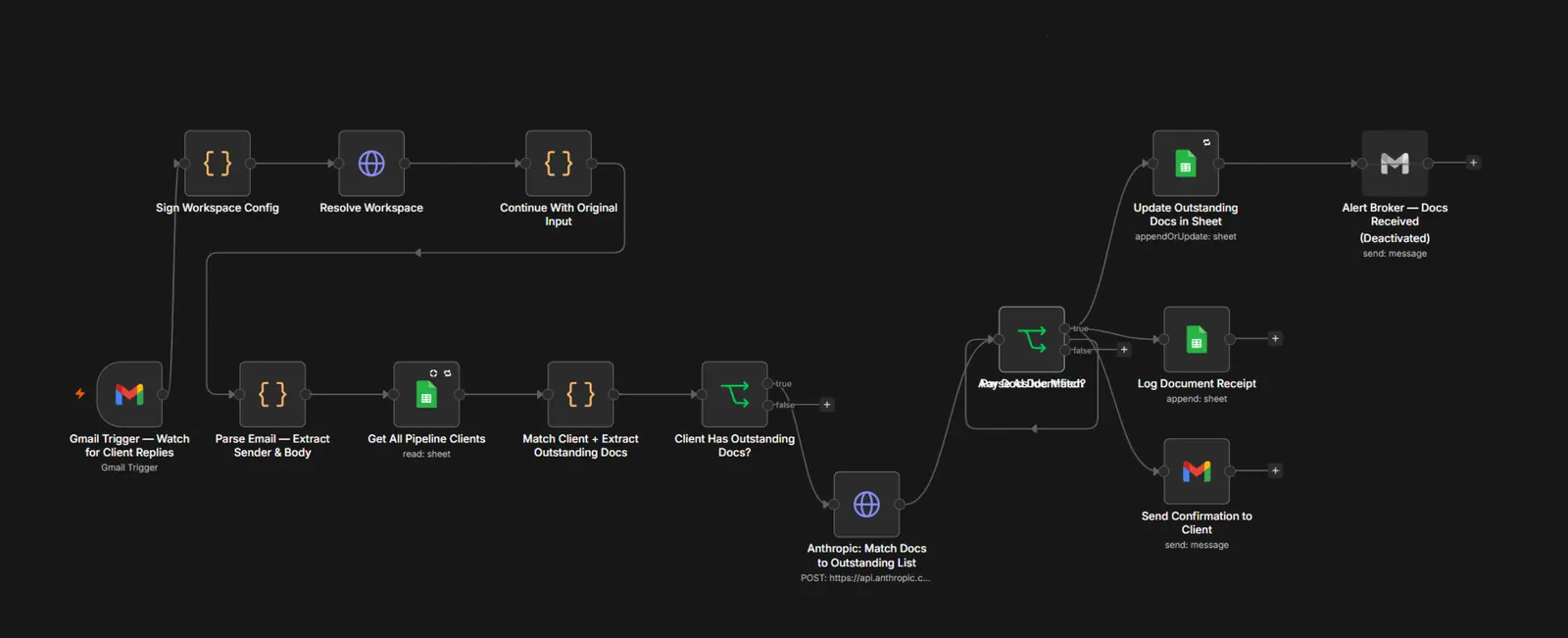
A Gmail trigger catches client replies and matches documents to the right record. A reply never sits in an inbox — it routes to the renewal it belongs to.
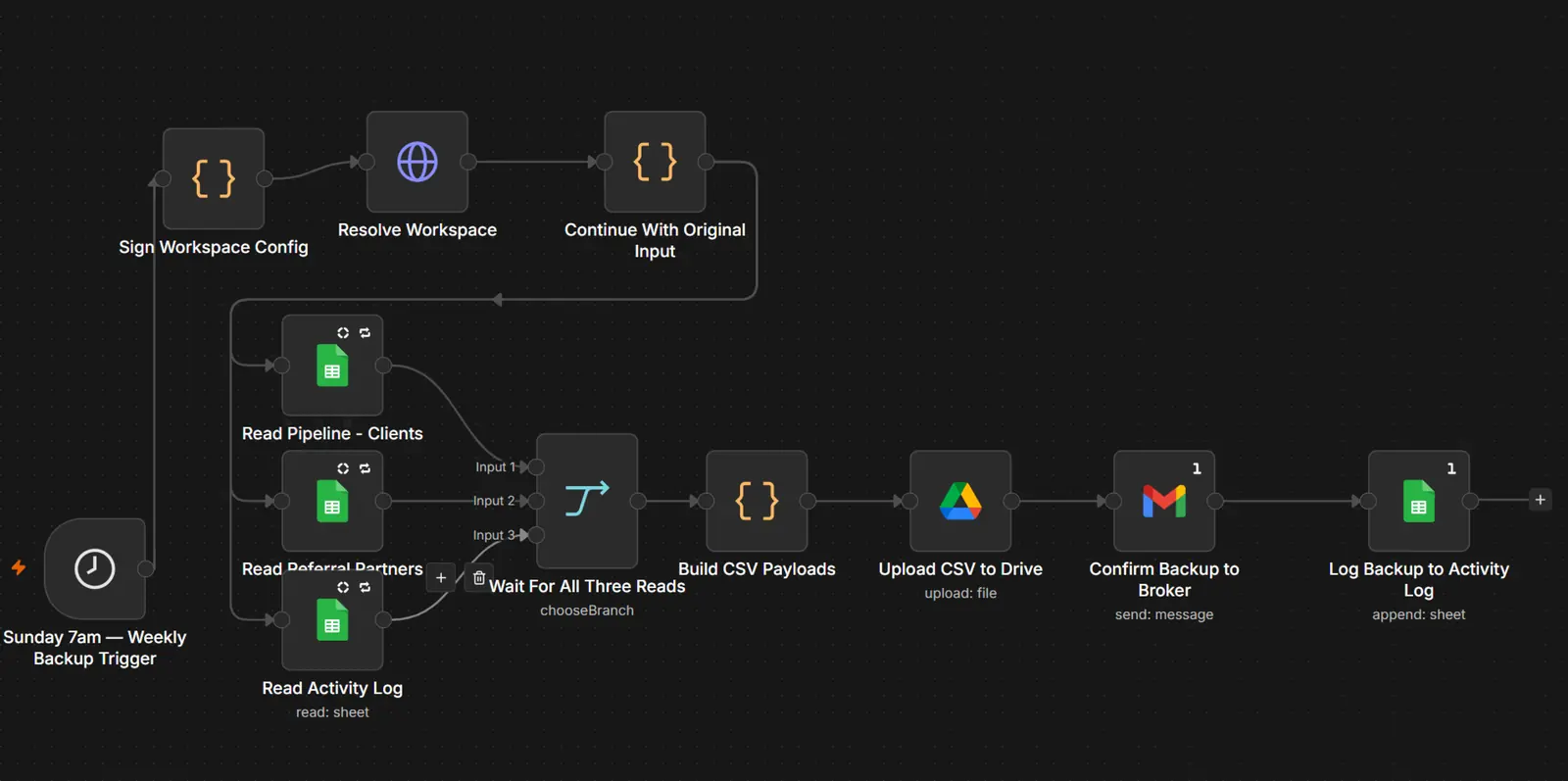
A scheduled full backup of the client book, confirmed by email. The brokerage’s data is never held hostage by the system that manages it.
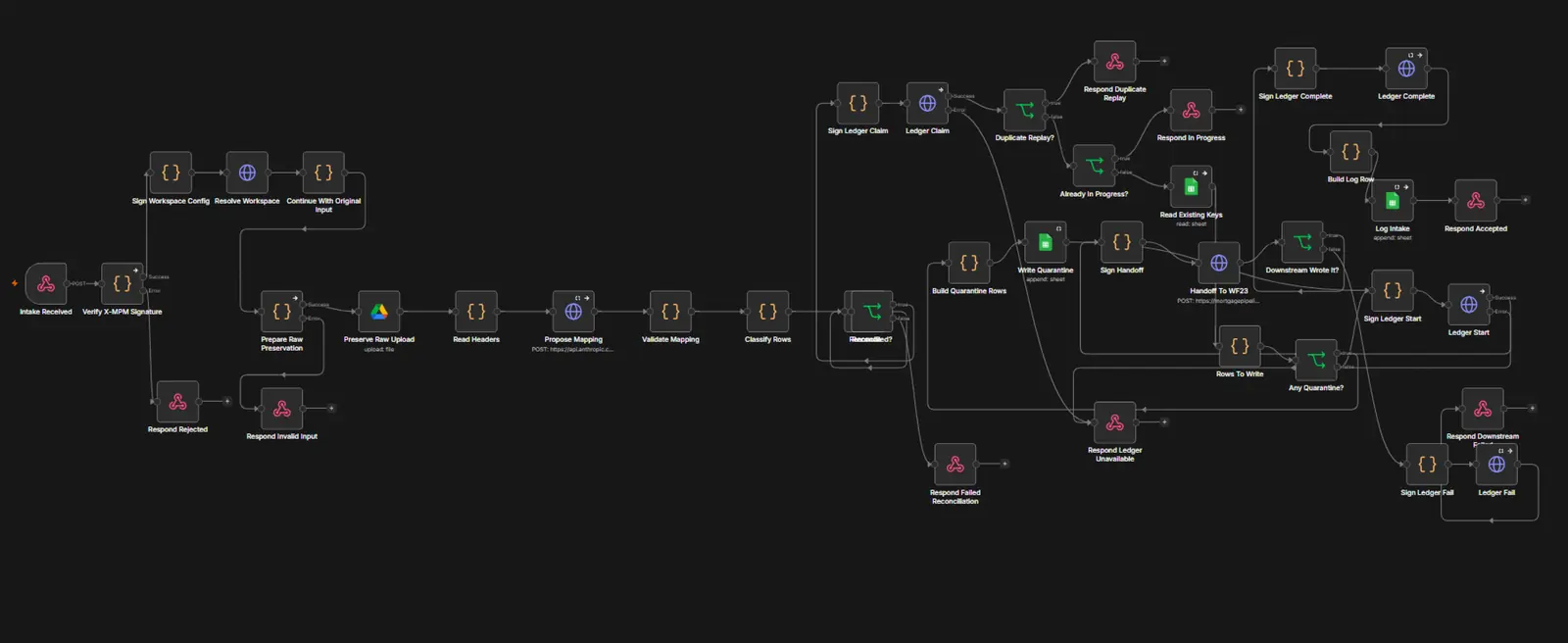
Intake is matched against the ledger so nothing enters twice and nothing drifts. The book the broker sees is the book the system acts on.
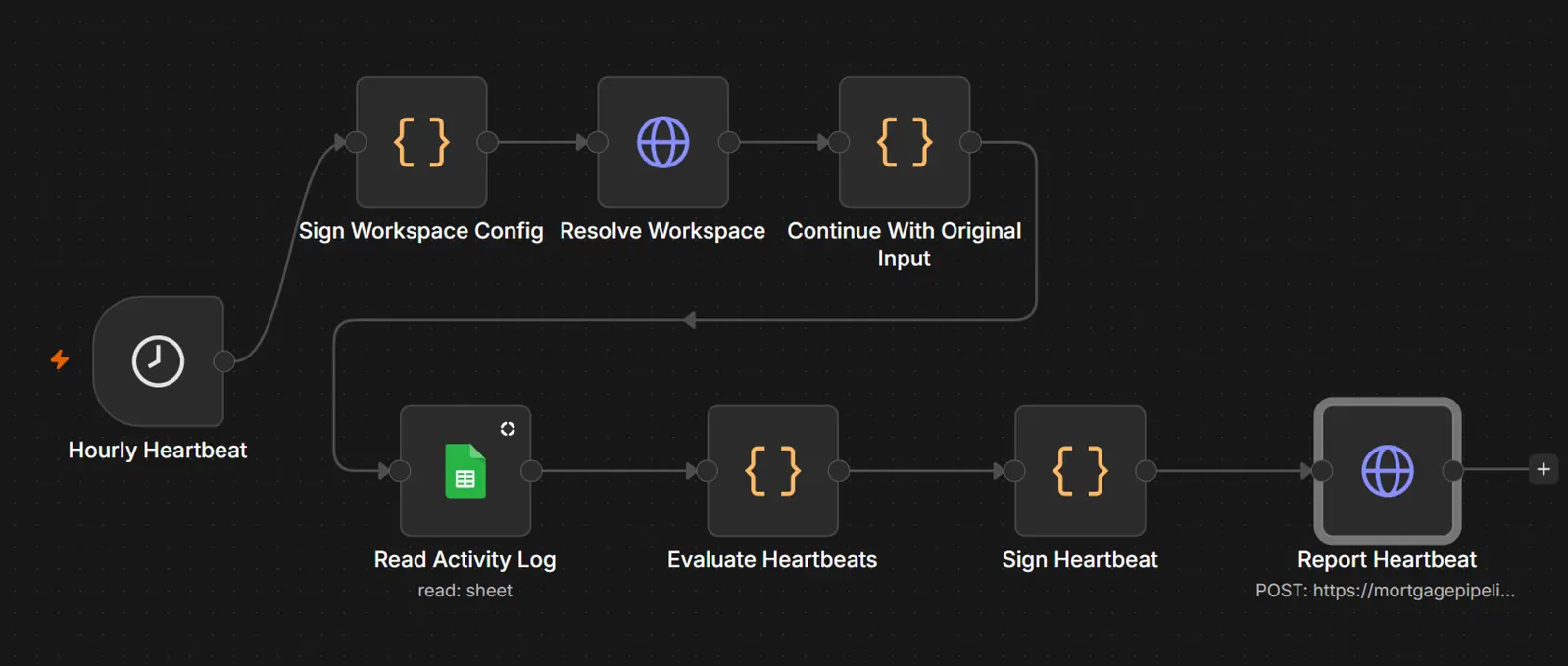
An hourly check that the schedules actually ran. If the scan stops, the broker knows within the hour — not at the next lost renewal.
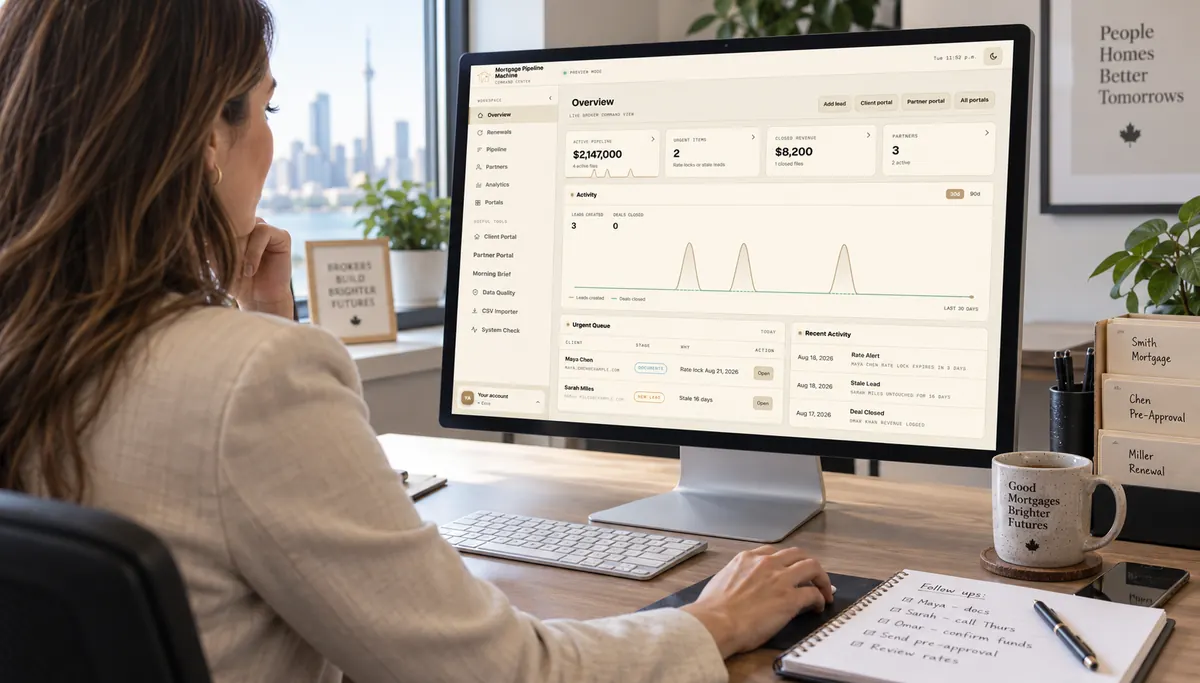
Three views run the operation: the book at a glance, the renewal pipeline, and the morning brief — today’s renewal actions in one screen.
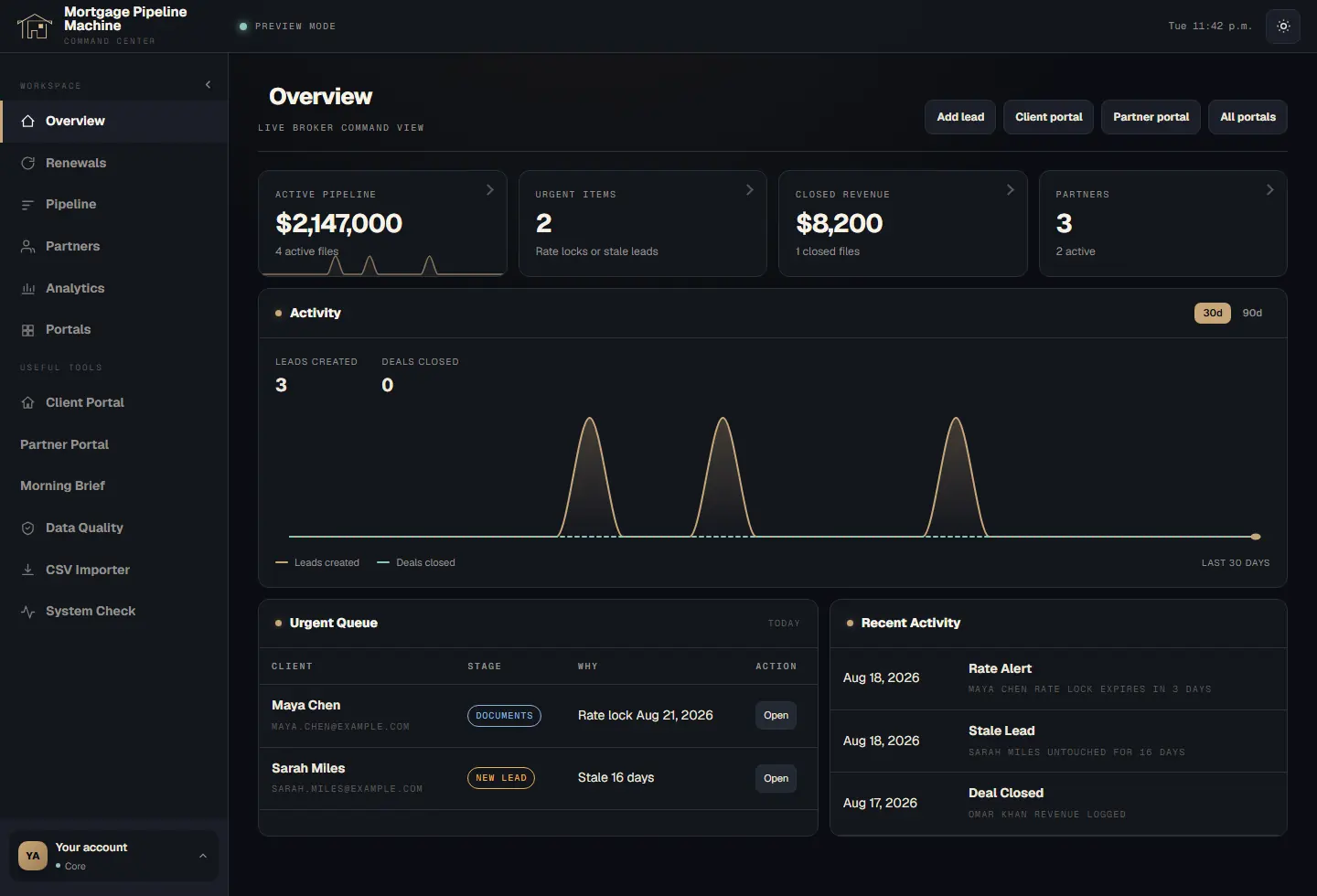
Above: the overview — the whole book, searchable, with renewal positions visible.
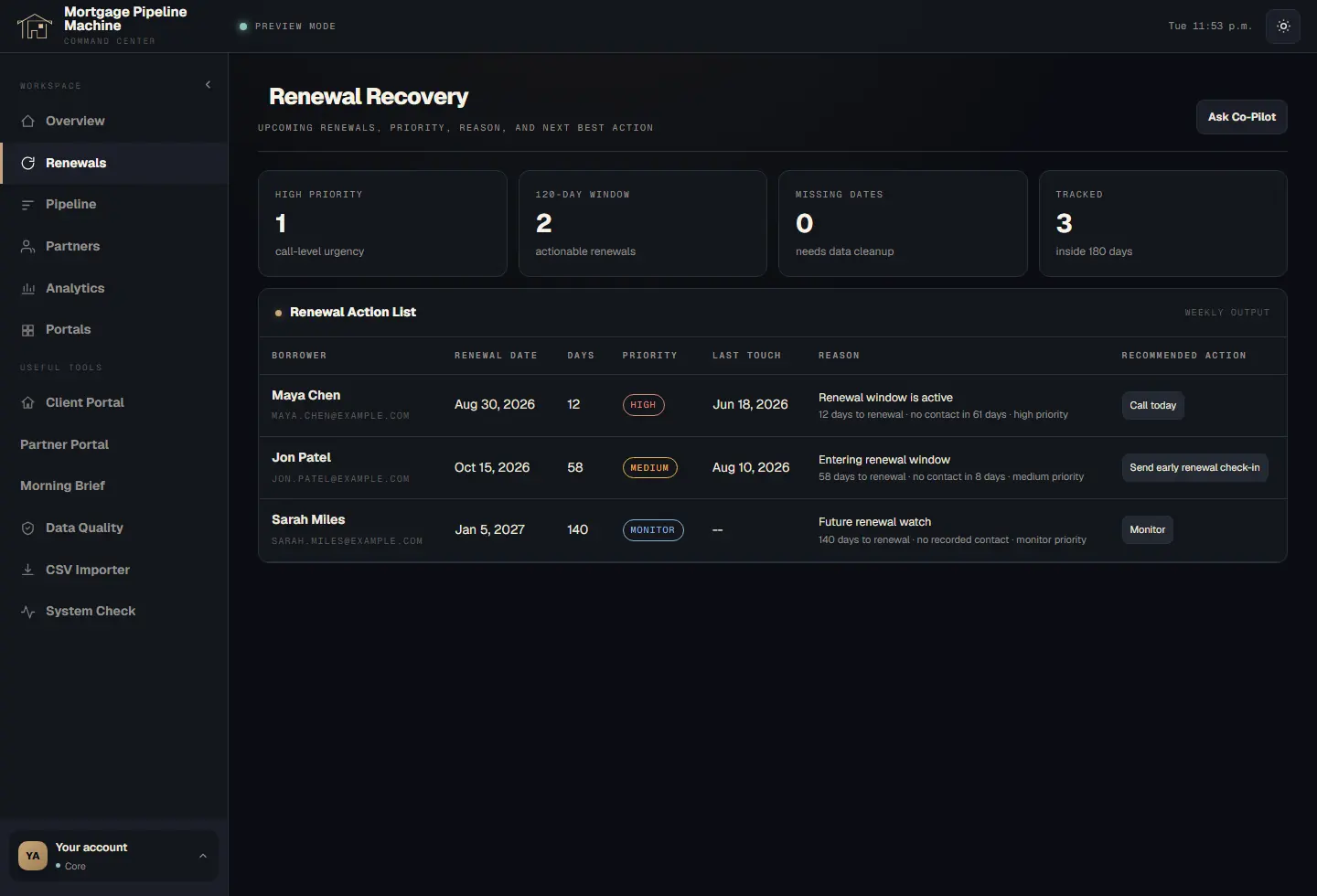
Above: renewal recovery — who is entering the window, who is contactable, who already has a review booked.
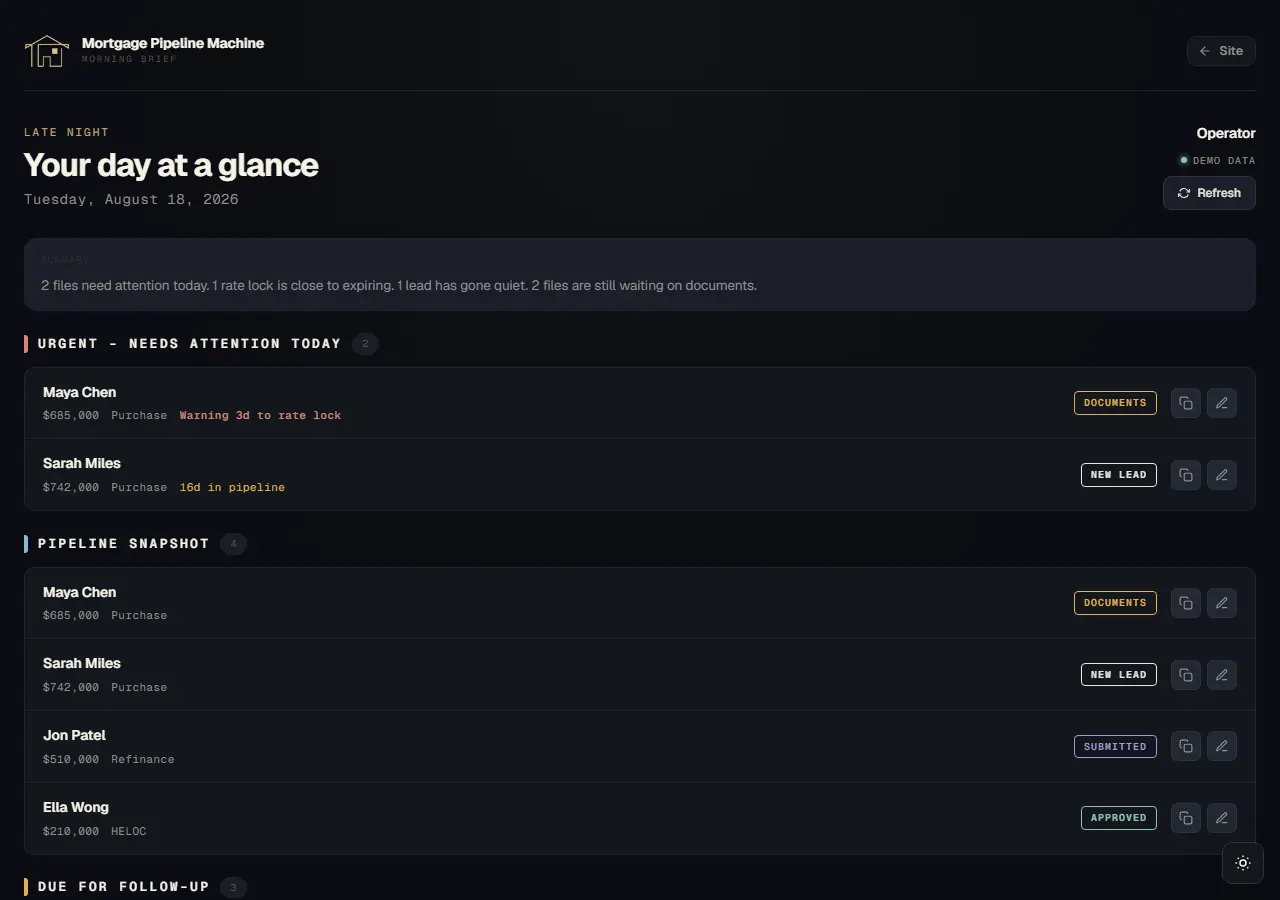
Above: the morning brief — today’s actions, nothing else.
PREVIEW MODE — DEMO DATA, NOT CLIENT RECORDSProduct email templates keep the broker informed without opening a dashboard: the monthly retention summary, the weekly backup confirmation, and the full data export.
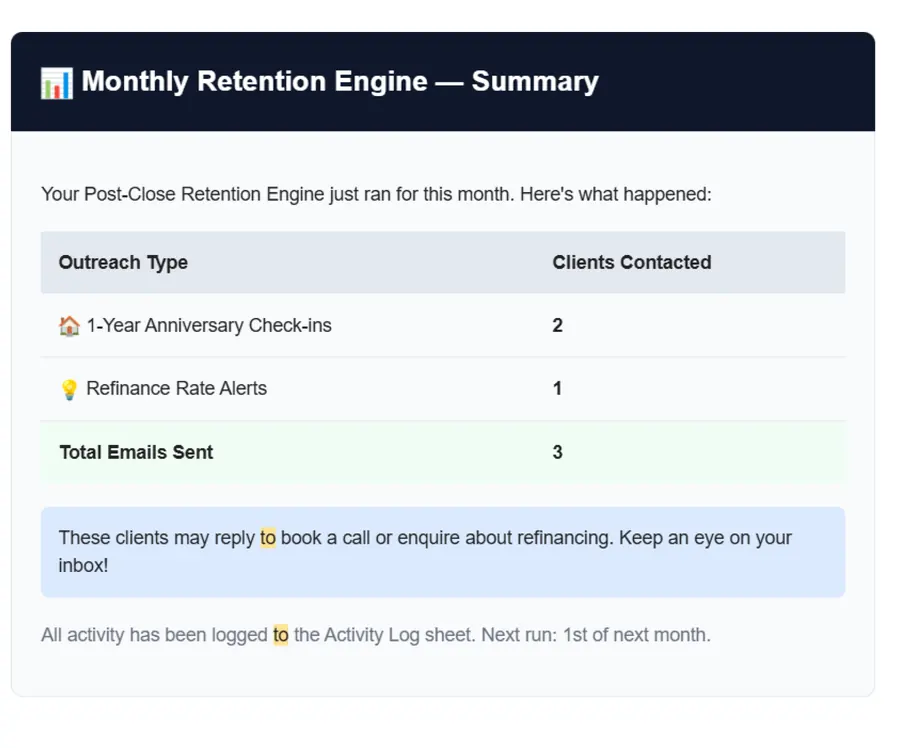
Above: the monthly retention summary — renewals surfaced, reviews booked, retained.
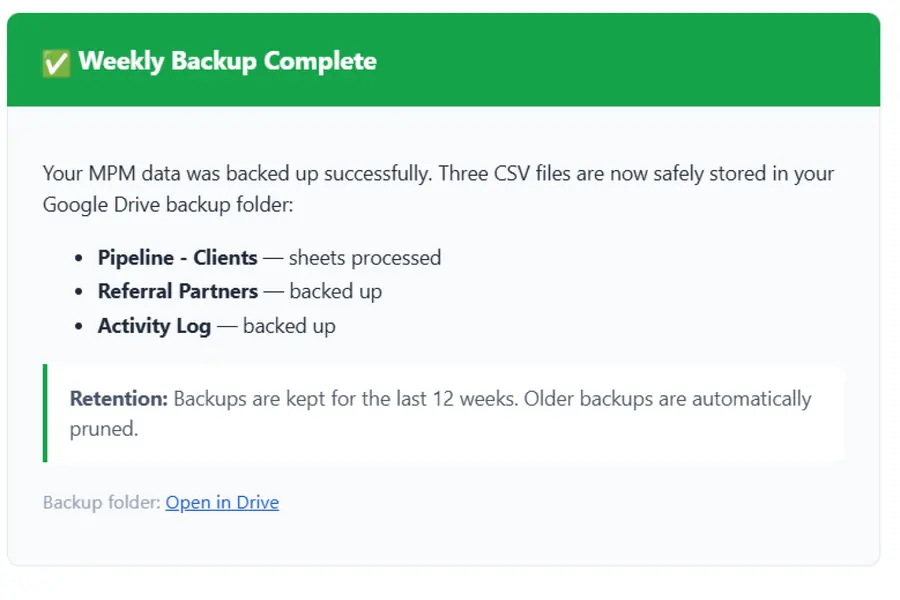
Above: the weekly backup confirmation — proof the book is safe.
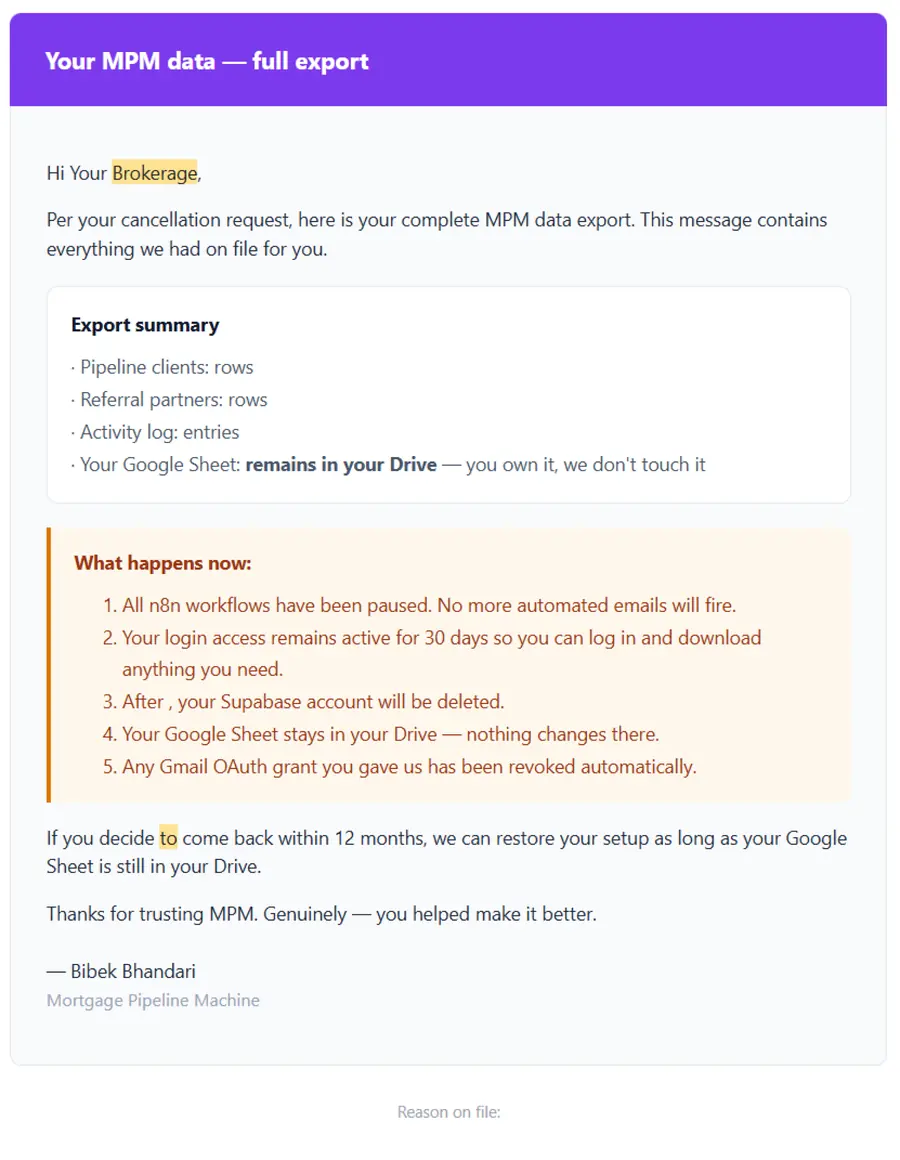
Above: the full data export — everything, on demand.
PRODUCT TEMPLATES — PLACEHOLDERS, NOT SENT-CLIENT PROOF| Stage | Focus | Key results |
|---|---|---|
| Stage 1 | Diagnose | Book review first: record quality, renewal-date coverage, consent posture — or a book that isn’t worth scanning, in which case there’s no sale. |
| Stage 2 | Configure | Workspace activated per brokerage: book imported, consent rules set, calendar bound, notifications routed. Existing tools preserved — never silently replaced. |
| Stage 3 | Accept | Builder acceptance runs, then Review Mode before live activation. Consent logic and copy reviewed before anything client-adjacent goes live. |
| Stage 4 | Measure | Honest baselines captured, then Day-30/60/90 evidence snapshots: renewals surfaced, reviews booked, retained. Verified, unknown, or not available — missing data never becomes zero. |
| Action | System authority | Human requirement |
|---|---|---|
| Record scanning | Automatic (scheduled) | Brokerage provides the book; source data stays theirs |
| Consent & suppression | Automatic checks | Broker defines consent policy; ambiguity goes to review |
| Borrower outreach | None | The system never messages borrowers on its own |
| Review booking | Assisted | Broker confirms; the conversation is always human |
| Retained / Lost | None | Human outcome decision with evidence |
| Backup & export | Automatic (scheduled) | Brokerage owns every export; nothing held hostage |
A record without clear consent is visible but uncontactable — counted in reporting, excluded from outreach. Suppression is a first-class state, not an afterthought, and it survives re-imports.
Installed around the brokerage’s existing accounts — not hidden inside a Laneo black box. The brokerage owns its book, its accounts, its sender, and its business data.
 n8n
n8n
 Gmail
Gmail
When every renewal date is watched and every past client carries a contactability state, the brokerage stops discovering lost renewals by accident. The broker can see the next quarter’s renewal pipeline before it arrives, staff the conversation workload honestly, and measure retention against a real baseline instead of a feeling. None of that is a revenue claim — it’s what a visible book allows.
Book a free 20-minute Process Review. We’ll map how your process works today, find the biggest gap, and tell you honestly whether there’s anything worth installing.
Book a Free Process Review →The review is free. Any third-party software or usage costs remain separate.